Capture
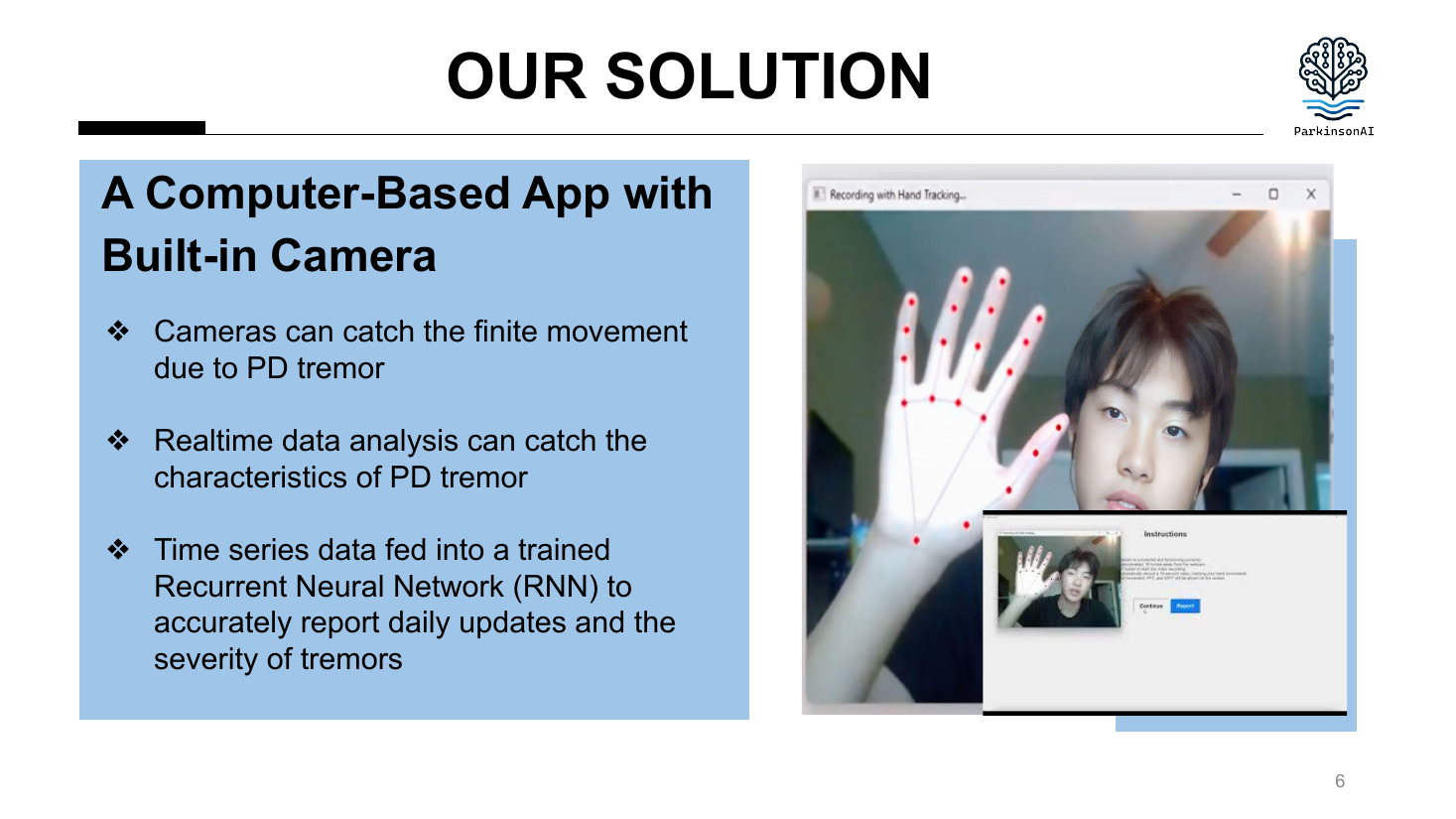
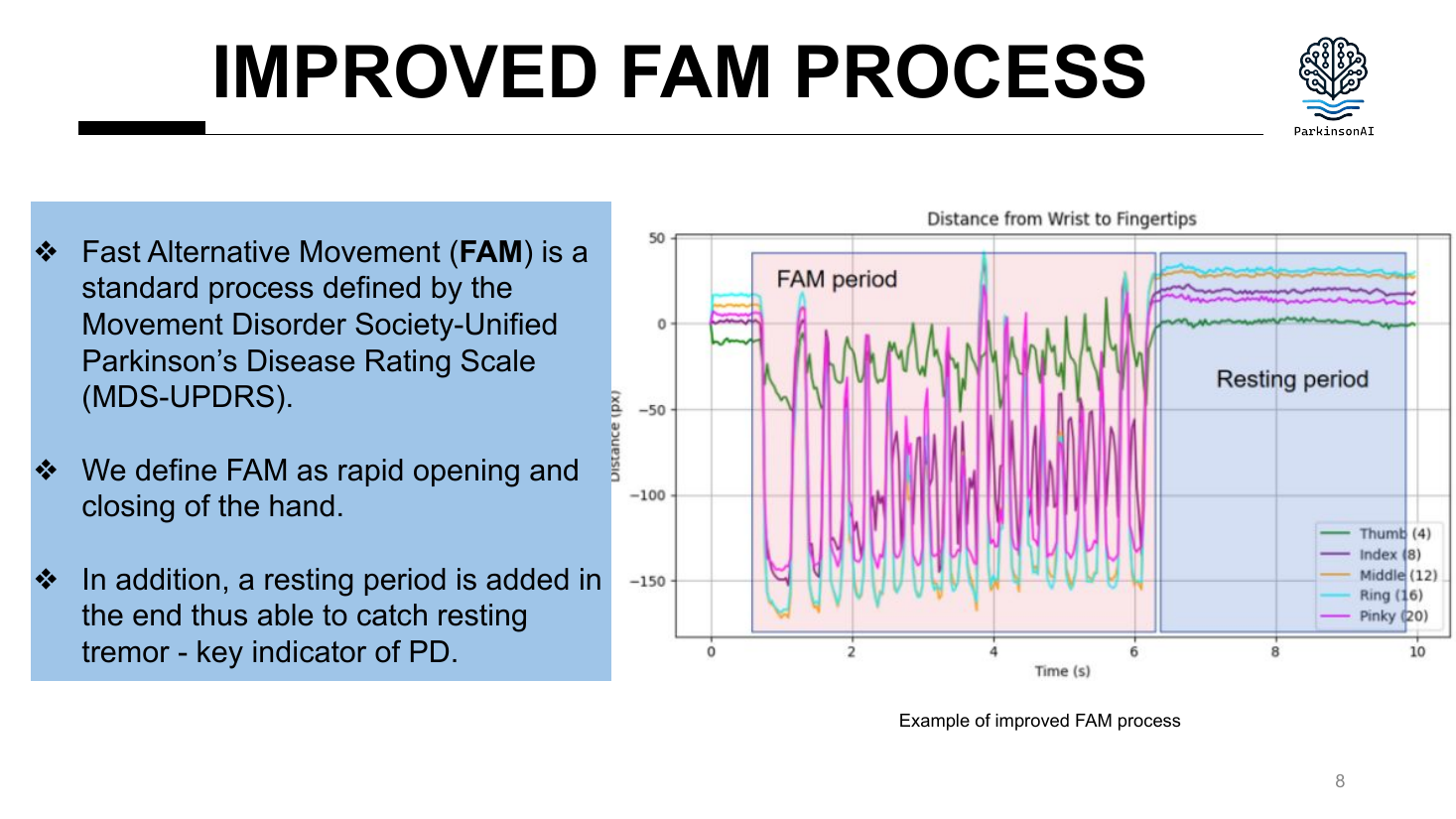
A 1080p camera records six seconds of rapid opening and closing, followed by four seconds at rest.
Research prototype · IEEE ISEC 2025
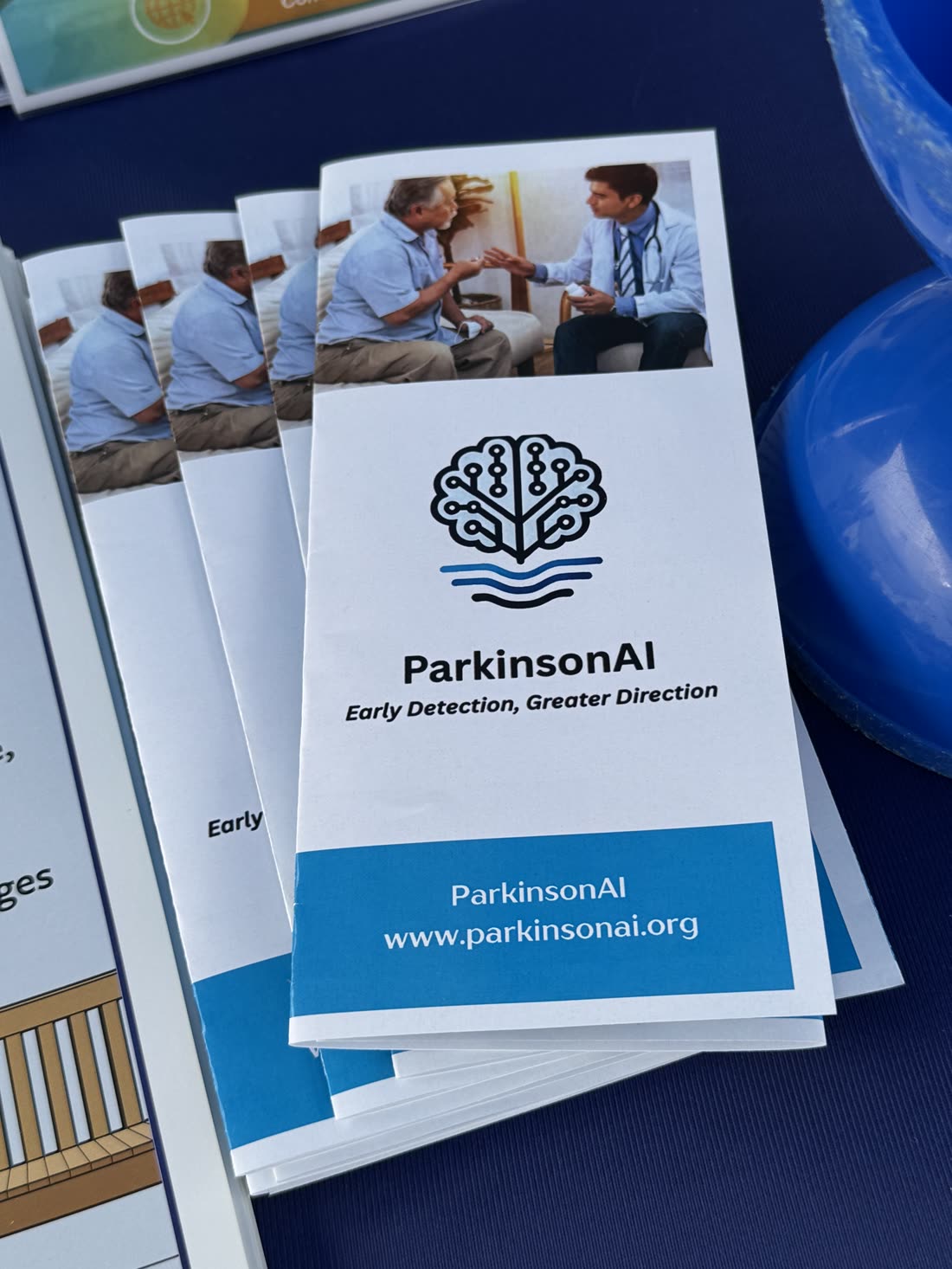
ParkinsonAI explores how an ordinary camera, computer vision, and machine learning could make motor-symptom monitoring more accessible at home.
Research prototype only · Not a diagnostic medical device
01 · The question
Parkinson's disease is commonly evaluated through clinical observation and specialized testing. Frequent assessment can be difficult to access, especially outside a clinical setting.
ParkinsonAI began with a focused research question: can a standard computer camera capture hand-motion features precisely enough to support longitudinal research into motor symptoms?
02 · The approach
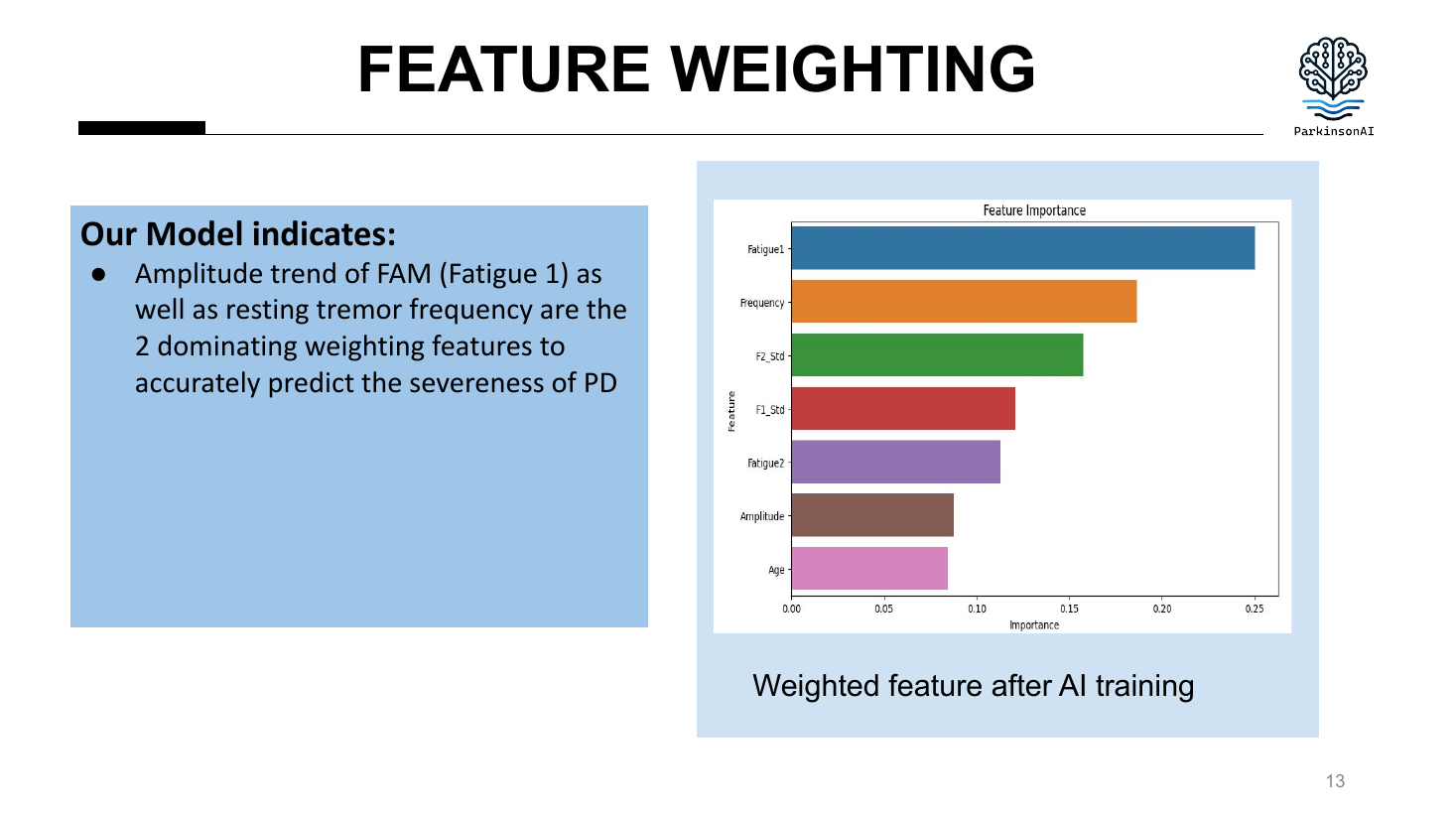
A short, repeatable protocol combines rapid hand movement with a resting period, allowing the prototype to examine motion, rhythm, fatigue, and tremor-related features.
A 1080p camera records six seconds of rapid opening and closing, followed by four seconds at rest.
MediaPipe tracks 21 landmarks while frequency-domain and time-series analysis extract movement features.
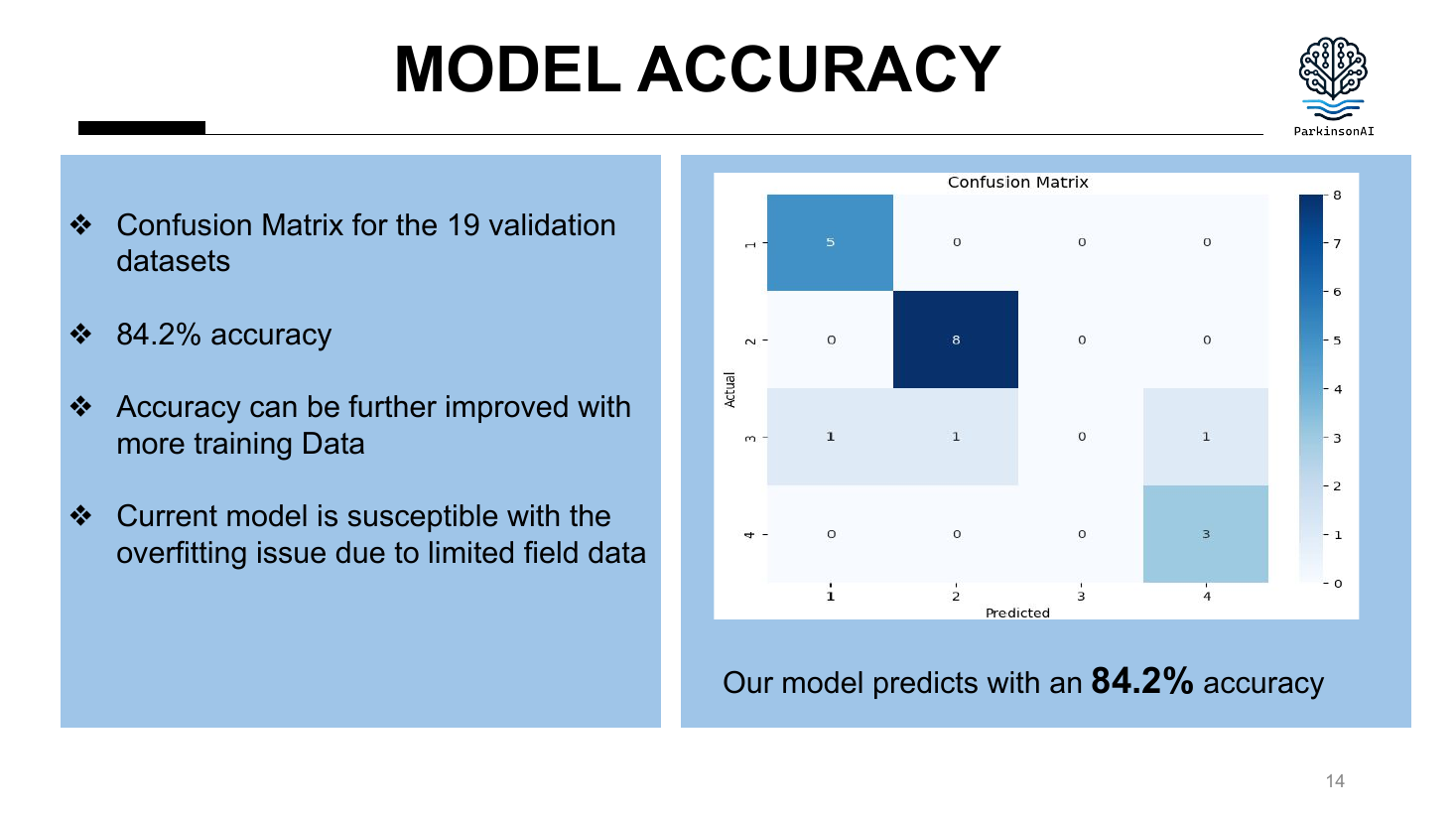
Five machine-learning methods contribute to a soft-voting classifier for the research prediction.
From code to field
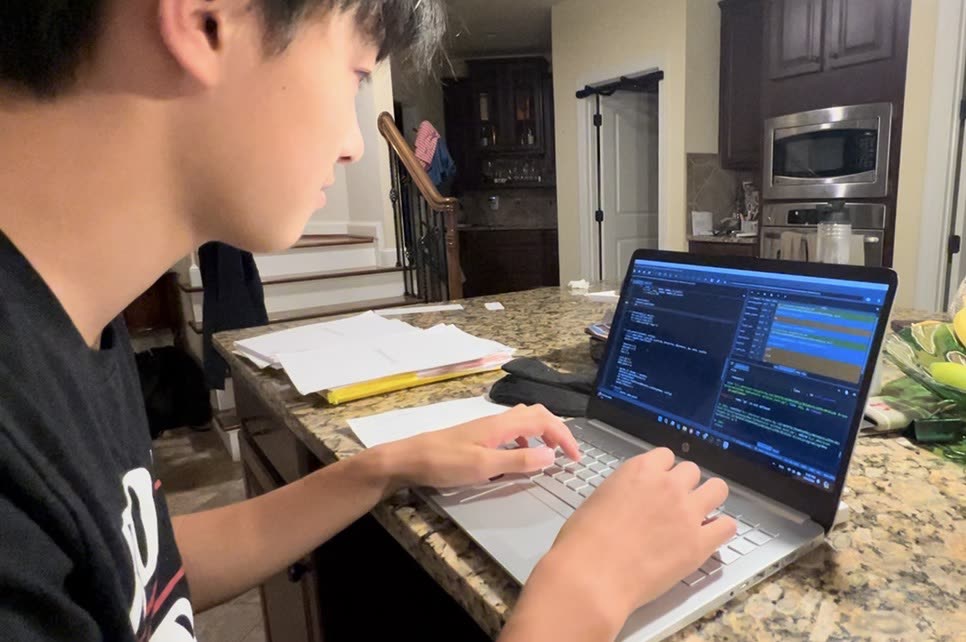
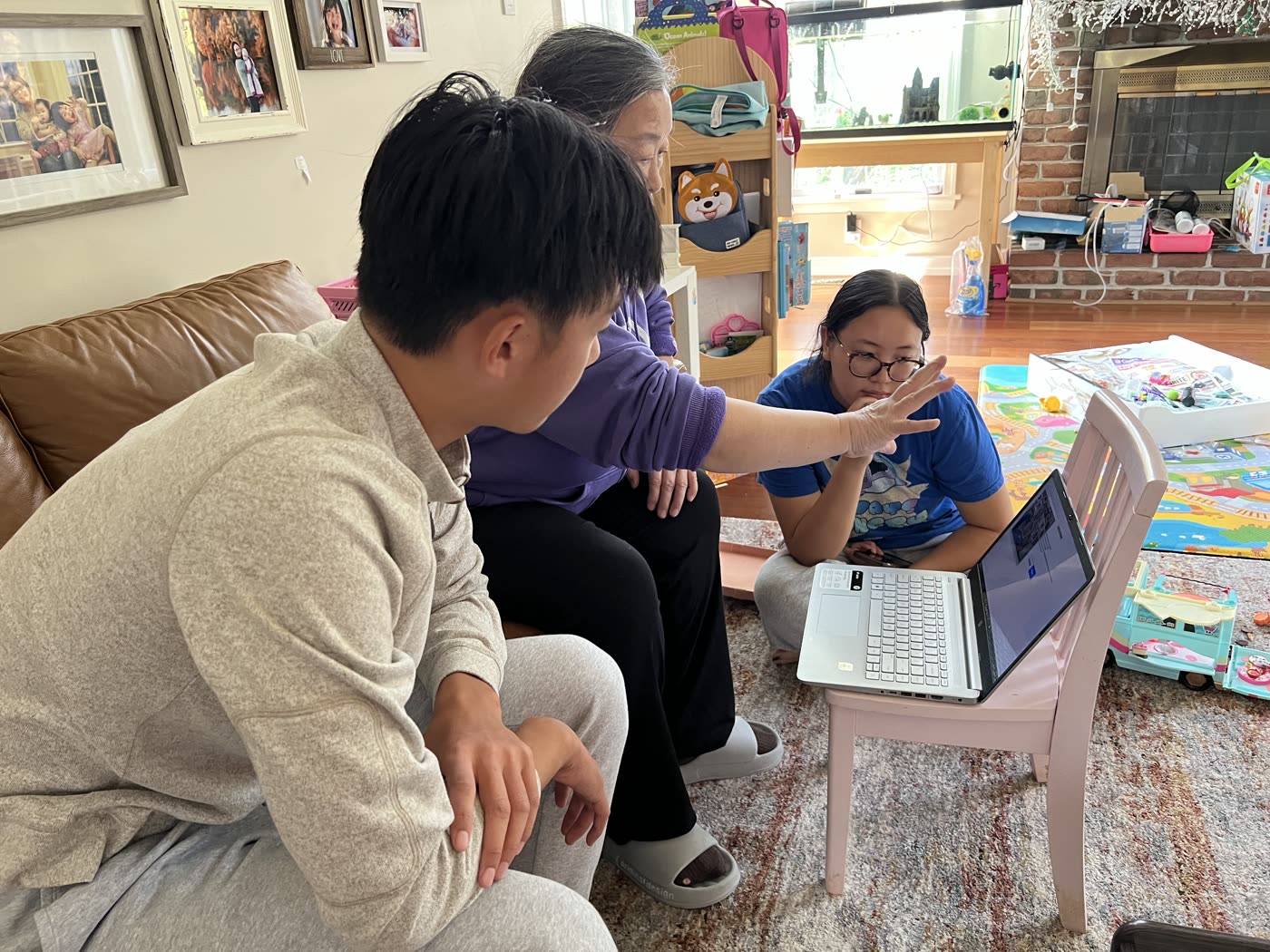
Eric developed the prototype, then watched volunteer participants use it in real settings. Their experience shaped clearer instructions and a more practical testing workflow.
The prototype is designed to retain derived landmark measurements rather than the source video.
03 · Initial study
The initial study demonstrates technical feasibility, while its limitations define the work that must come next.
Research integrity
The dataset is small, particularly across individual severity levels, creating a risk of bias and overfitting.
The initial labels were not assigned by medical professionals. Clinically certified data and independent validation are required before clinical use could be considered.
Published research
Eric Zhu · Emily Dong · Alex Zhu
IEEE Integrated STEM Education Conference · 2025
04 · Community partnership
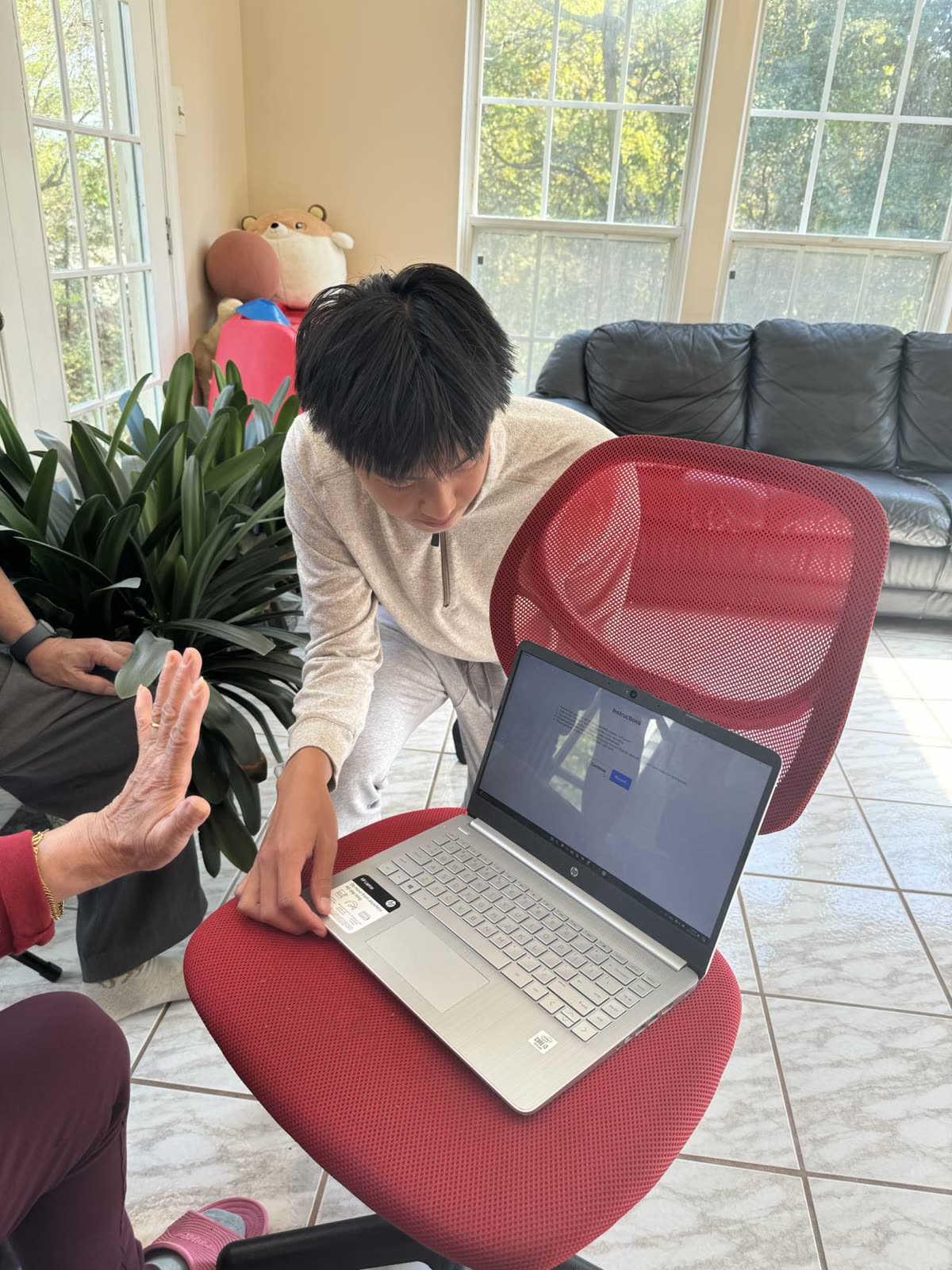
In partnership with the Asian American Healthcare Center , Eric and the ParkinsonAI team invited volunteer participants to complete the camera-based hand-movement protocol and helped expand the project's field dataset.
Each session revealed more than a data point. Watching people use the prototype showed where instructions, positioning, and the experience itself needed to become clearer and more humane.
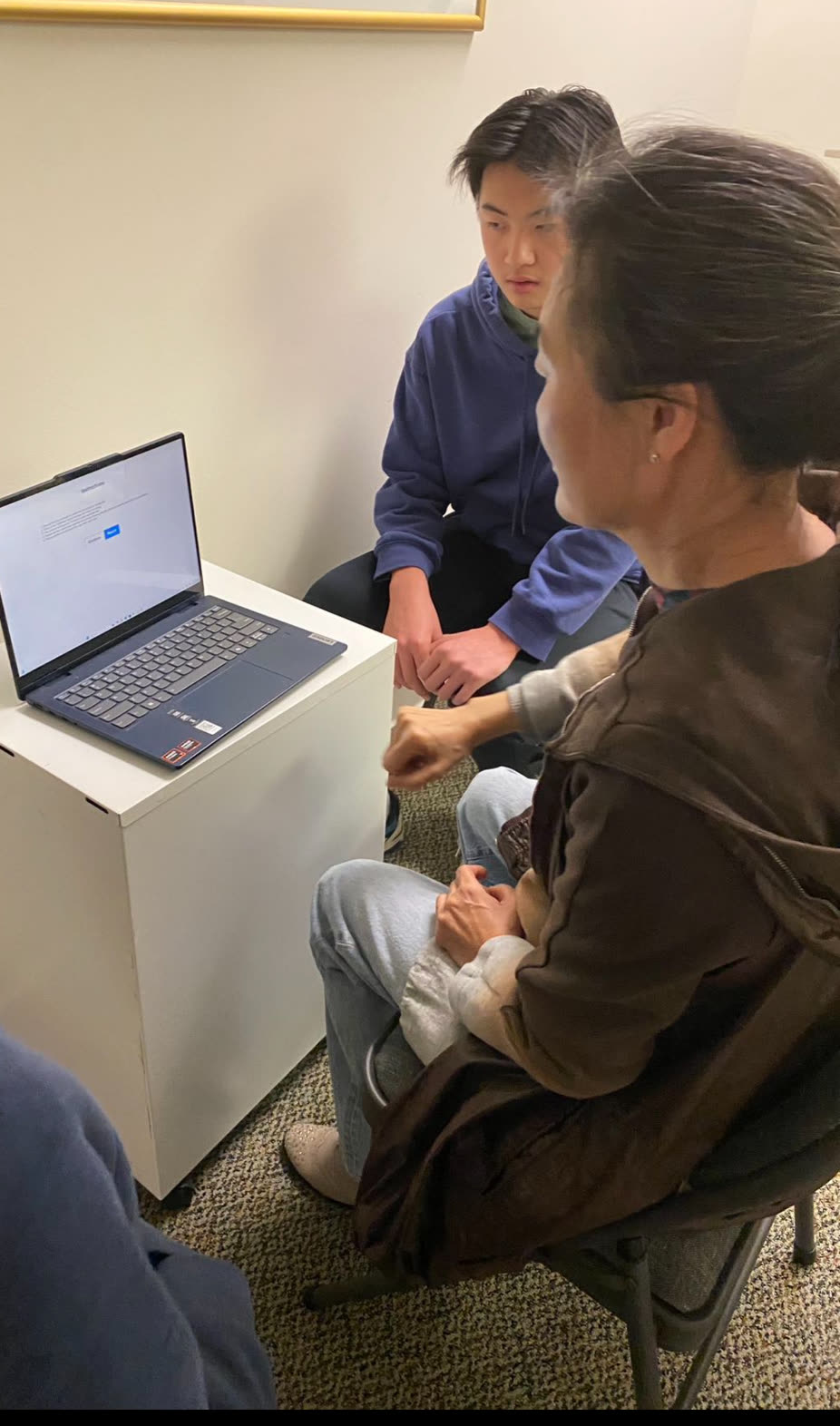
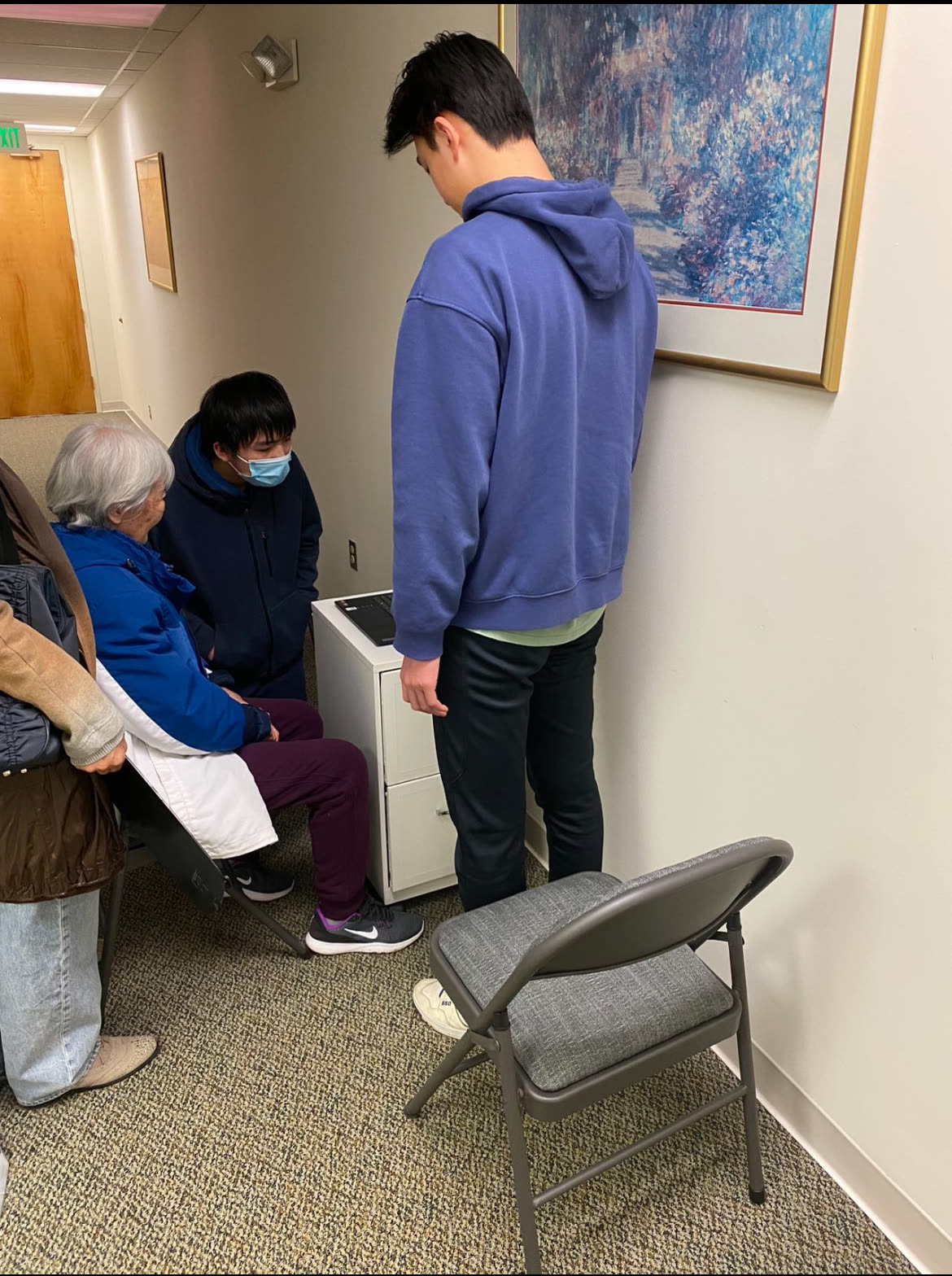
These community sessions supported prototype evaluation and research measurement. ParkinsonAI is not a medical diagnostic tool.
Community outreach
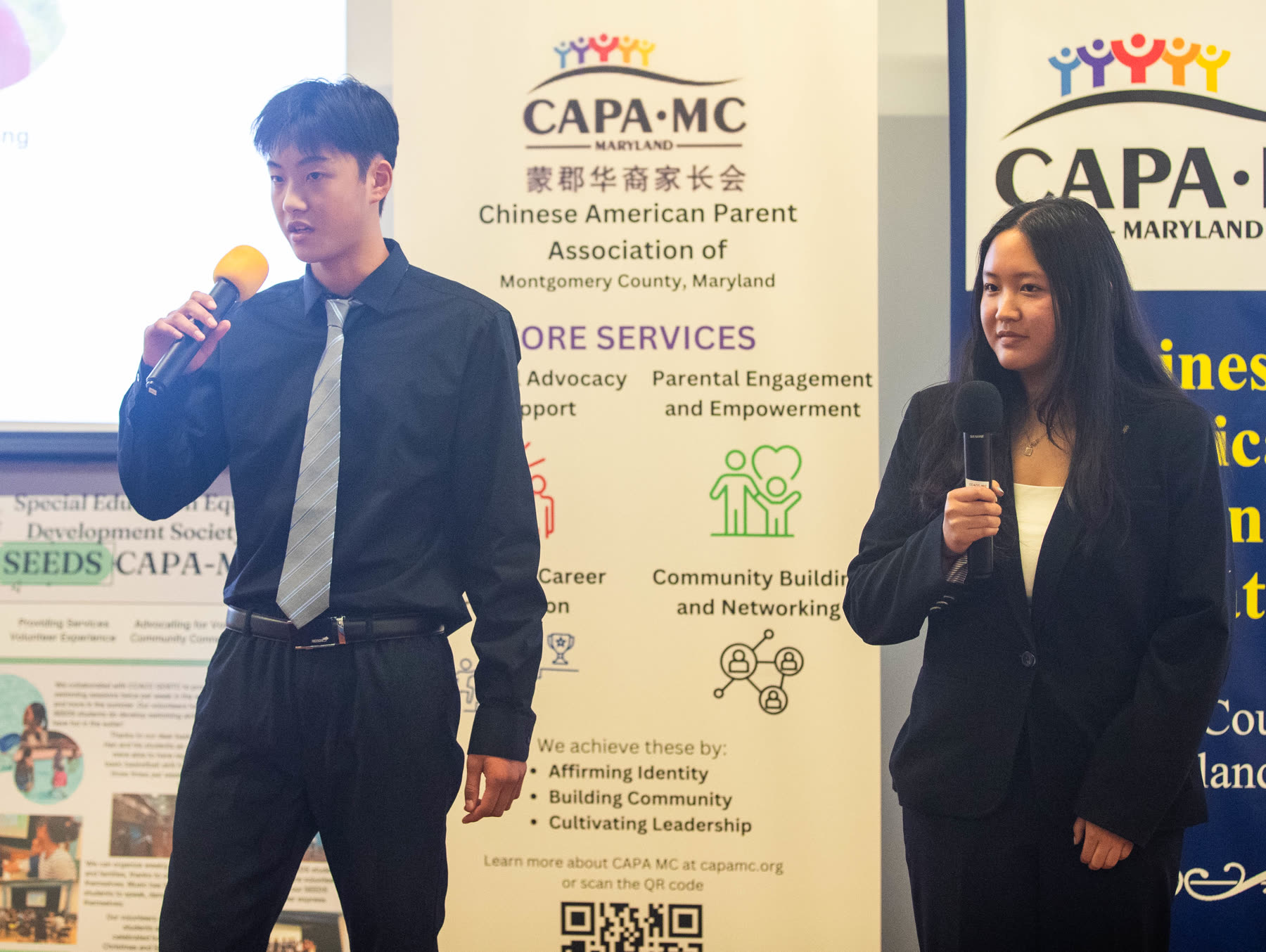
Eric brought ParkinsonAI beyond the lab—speaking with families, caregivers, and older adults about why accessible early-monitoring research matters. Through the Chinese American Parent Association of Howard County , he helped turn a technical idea into a community dialogue.
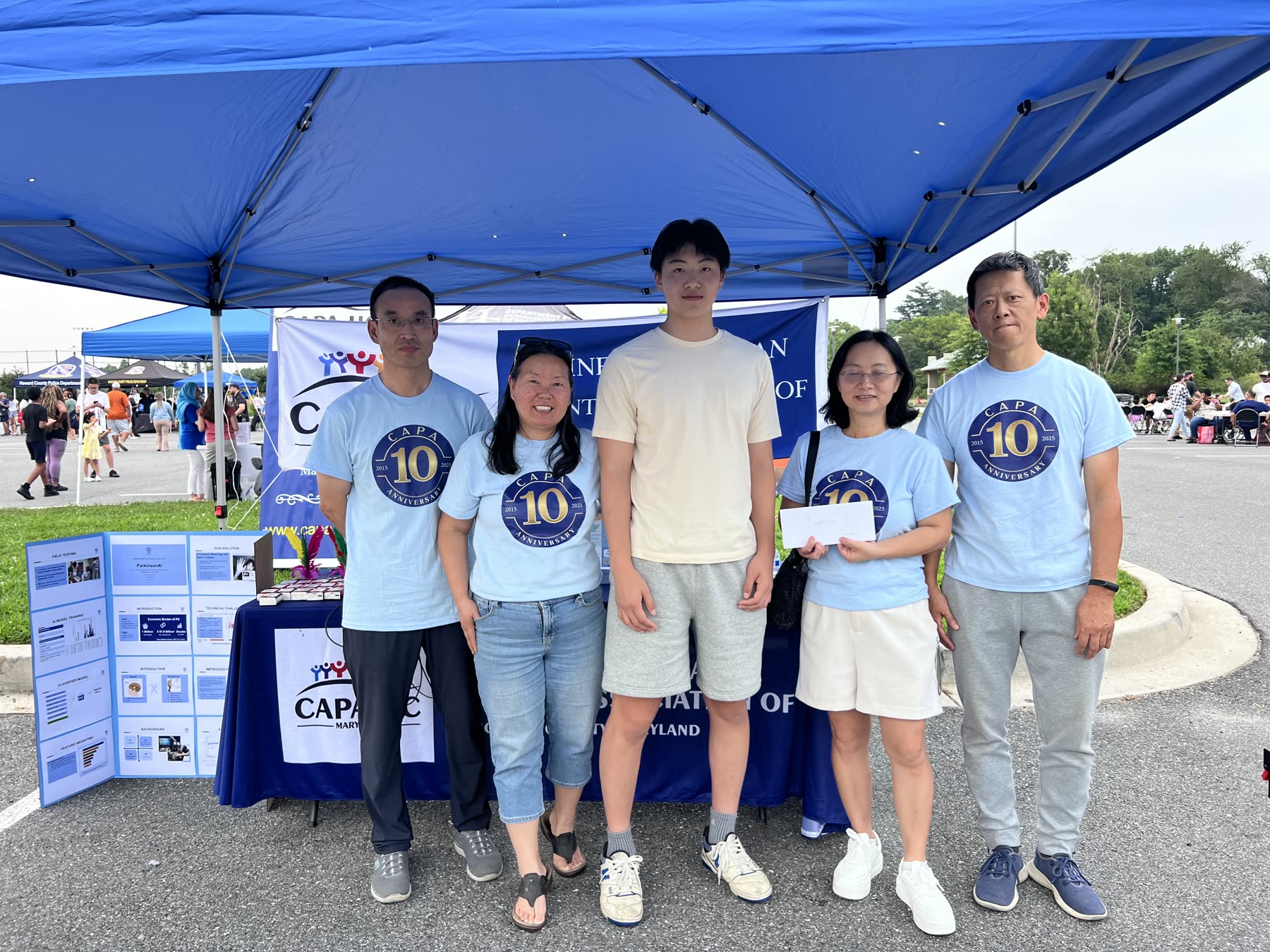
Eric joined CAPA-HC volunteers to demonstrate the prototype and discuss early-monitoring research with families and seniors.
05 · From prototype to possibility
The team translated the technical prototype into a business plan: identifying users, considering adoption and privacy, and imagining how accessible monitoring research might responsibly reach people.
Impact in practice
Community collaboration gave ParkinsonAI a human measure of progress: listen to potential users, explain the work clearly, and build with—not simply for—the people it hopes to serve.
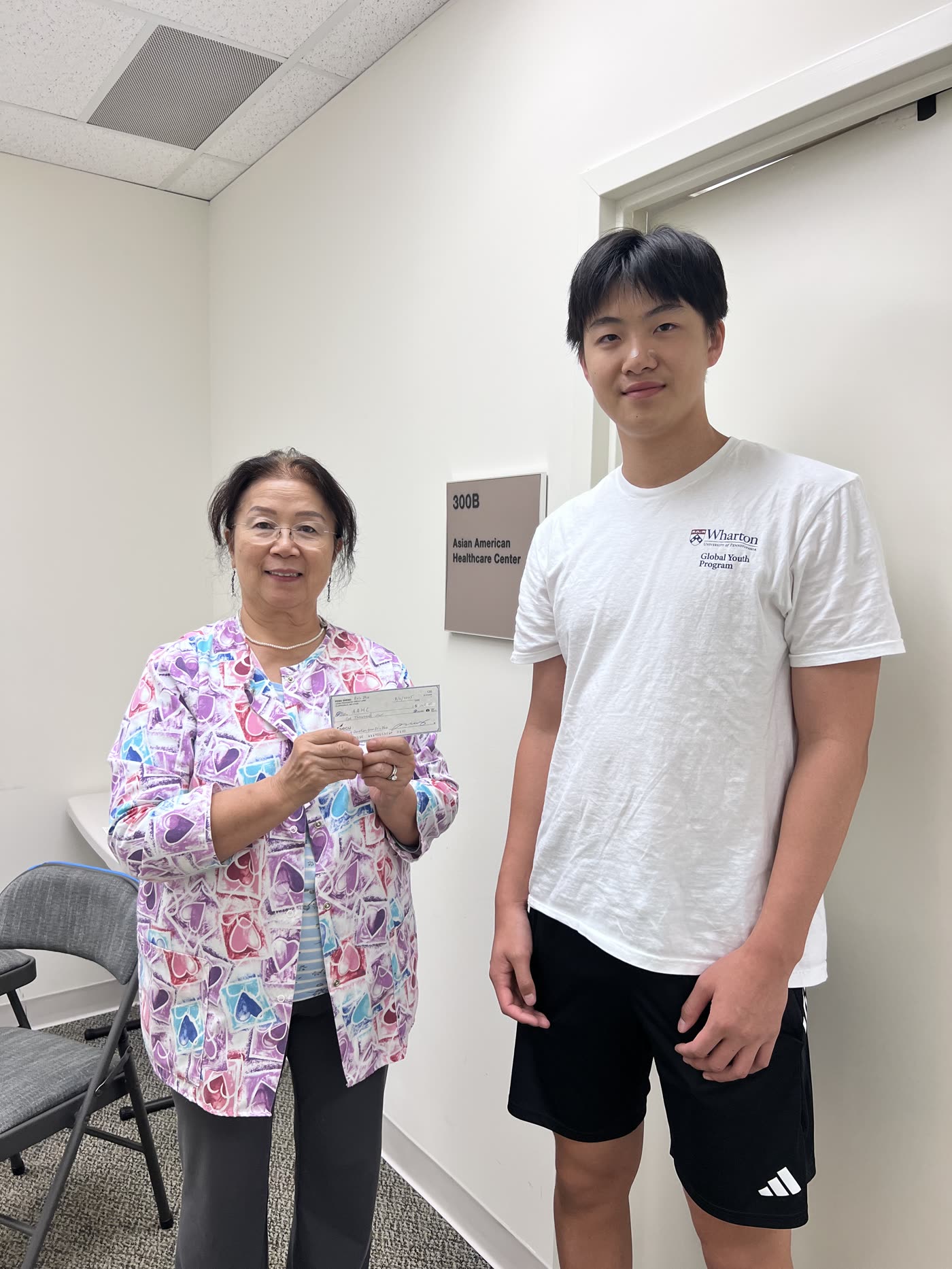
Community endorsement
An Asian American Healthcare Center director shares her perspective on ParkinsonAI, Eric's community engagement, and the importance of making conversations about early monitoring more accessible.
Community perspective · Not clinical validation06 · The people
Student-led engineering strengthened by scientific mentorship and community support.
CEO & Head of Engineering
Groton School
Research & development
River Hill High School
Research & development
River Hill High School
Scientific mentorship
Looking forward
Future work centers on clinically labeled datasets, stronger external validation, expanded tremor modeling, and careful study of how this research could support—not replace—qualified medical professionals.